Ups and Downs
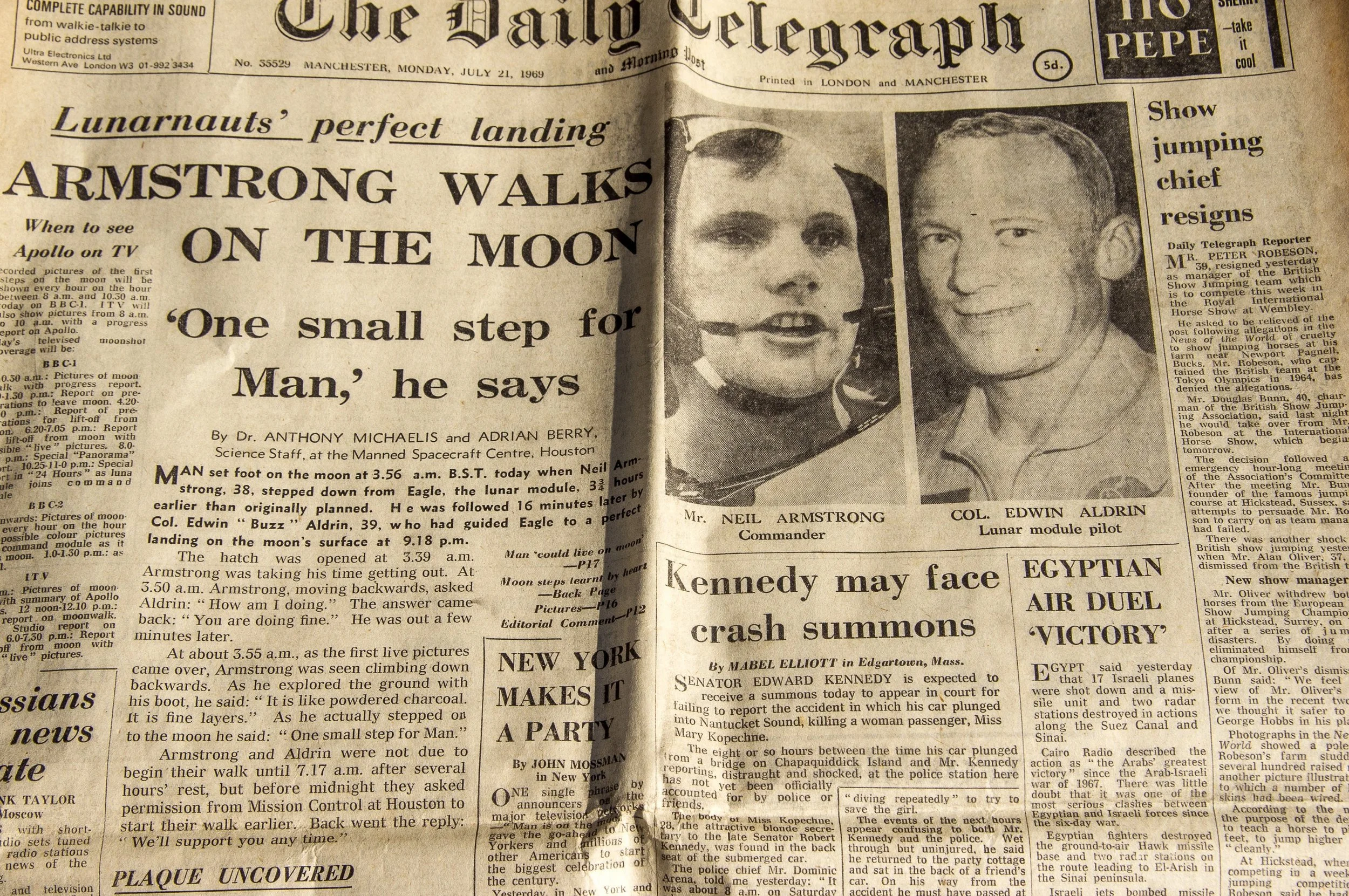
One of the many ground-breaking events which happened after Seven Up! aired
I can’t quite remember when I first came across the ground-breaking World in Action television series which began with Seven Up! in 1963. Whenever it was, I was gripped. Under the slightly autocratic leadership of Michael Apted, the programme’s director, a group of children who turned seven in 1963 were brought together for something which was part social experiment, part genius programming and part ongoing historical documentary. There had never been anything like it before and there would never be anything like it again. The series concluded with Seventy Up this year.
The concept seems simple, but back in 1963, it was radical stuff. Children spoke in their own voices, responding to questions voiced by an adult (Apted from 1970) off-camera. Their parents were rarely seen, and if they were in shot, it was always in the background. The viewer was thus able to watch fourteen seven-year-olds, missing teeth, piping voices, oversized hair ribbons and all morph into grumpy teenagers, young adults, parents (in some cases), middle-age and all the way into old age. Each new programme gave us clips of what had gone before. By Seventy Up, two of the participants were no longer with us.
The original programme was in black and white. The children were interviewed at their schools. Then they were all taken to London where they had a party, an outing to the zoo and trip to the adventure playground. The yawning chasm between upper and working class people was never more evident than in this scene. The three public school boys in their caps and smart raincoats seemed out of place. Loveable, cheeky Tony, the diminutive Cockney in his brother’s hand-me-downs, was the only child not to leap back in fear as the polar bear lumbered towards the front of his enclosure. The three little girls from the Bethnal Green primary school, Jackie, Susan and Lynn, tumbled down the slide laughing. The little boys from the children’s home, Symon and Paul, immediately began building a house, one of them cheerfully wielding a pick axe. Suzie, privately educated only child of a wealthy landowner beamed as she swung in an old tyre.
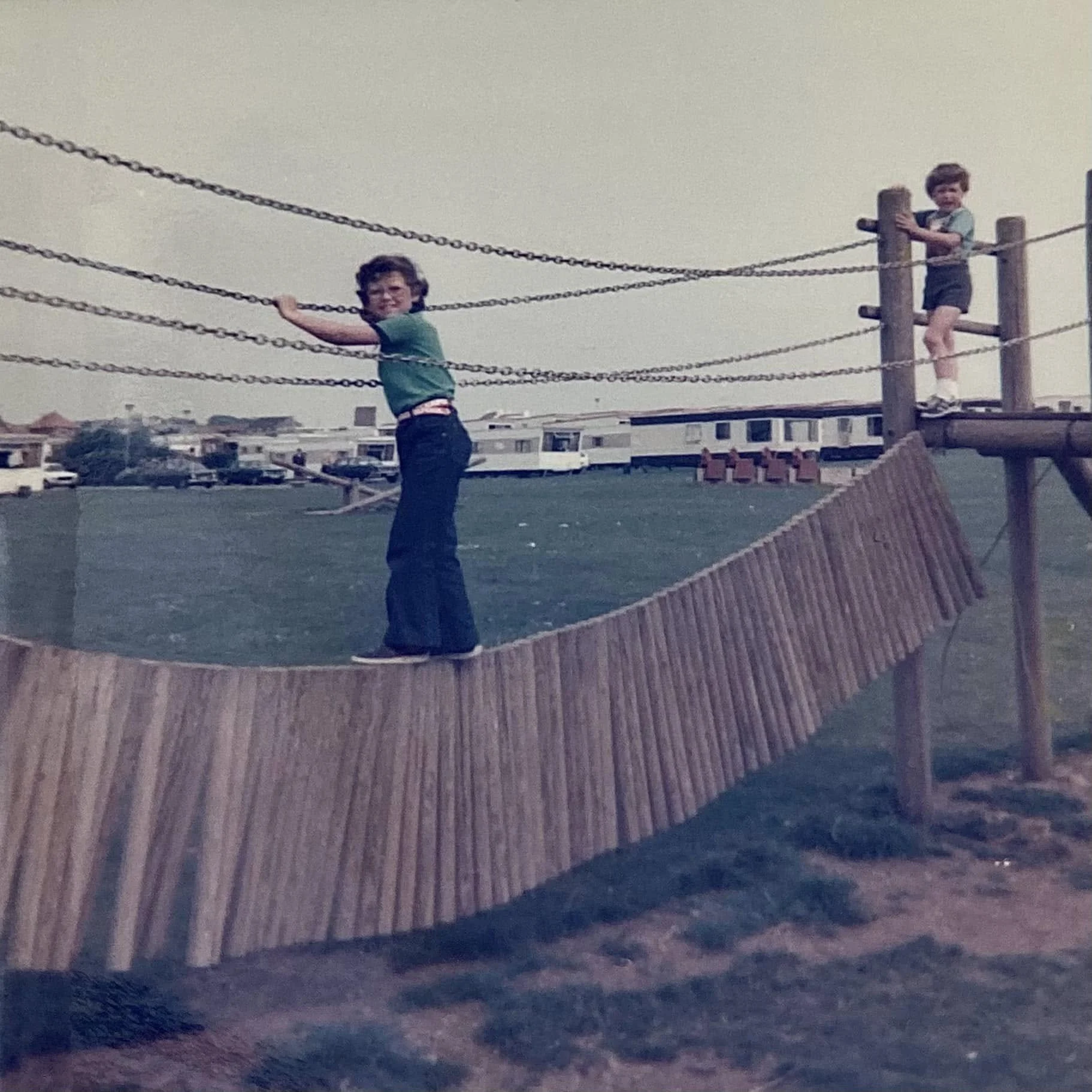
The playground was familiar to me. Growing up, we would climb up vertiginous slides with narrow chutes. If we fell off, we fell off. Climbing frames were equally dangerous and both kinds of roundabout invited the unwary child to stack up some impressive bruises, grazes and scrapes. This playground featured lots of loose planks of wood, probably with the nails still in, what looked like scaffolding poles stuck together and various dangerous pieces of equipment. It took me right back.
The privately educated children included a trio of little boys (John, Andrew and Charles) who spoke in ludicrously posh voices and claimed to read the Financial Times. As the series continued, Charles, always the least conventional of the three, had a blazing row with Apted and left before Twenty Eight Up. Suzie, miserable and angry with a great line in eye rolling at fourteen and twenty-one had blossomed into happiness by twenty-eight. There was Bruce, sweet and gentle and thousands of miles from his parents, brainy Nick the nuclear scientist who moved to America and Peter and Neil from a Liverpool suburb.
Some of the stories are unbearably poignant. Anyone watching the series would probably agree that Neil, the adorable little boy who wanted to be an astronaut and who ended up sporadically homeless, hitchhiking in the rain with two suitcases, was the one who tugged most upon the viewers’ heartstrings. But there were moments of joy in his story too, just as there were in Symon’s trajectory from illegitimate mixed-race child with low expectations of himself to a family man who has fostered hundreds of children with his second wife.
We all have dreams and we all pick up scars along the way. Watching fourteen people do that on our screens over sixty-three years is a unique experience. If you did your research and watched carefully (which I did), you learned that all the privately educated children with their ballet lessons, Oxbridge aspirations and tweed suits had divorced parents. John’s father died when he was nine. Nothing, perhaps, was quite as it seemed.
Tony ended up living in Epping Forest with his wife, a stone’s throw from where I grew up. To watch him looking back and realising that his greatest regret was abandoning his lifelong dream of being a jockey almost made me cry.
The series is uplifting, illuminating, desperately sad, hopeful, poignant and a must-watch. Make sure you have a box of tissues to hand. You’ll need them.